12 September 2010
With almost a month of the project down, I sorted through the waste I have accumulated over the last 4 weeks to see what patterns there were and what waste types I can try to eliminate.
There really isn't any 'random' garbage, all of the things I've accumulated can be put in categories more or less:
_twist-ties (from wrapping greens and other vegetables together)
_milk top plastic rings (even though the containers/caps are reusable there is still this small waste)
_bottle caps
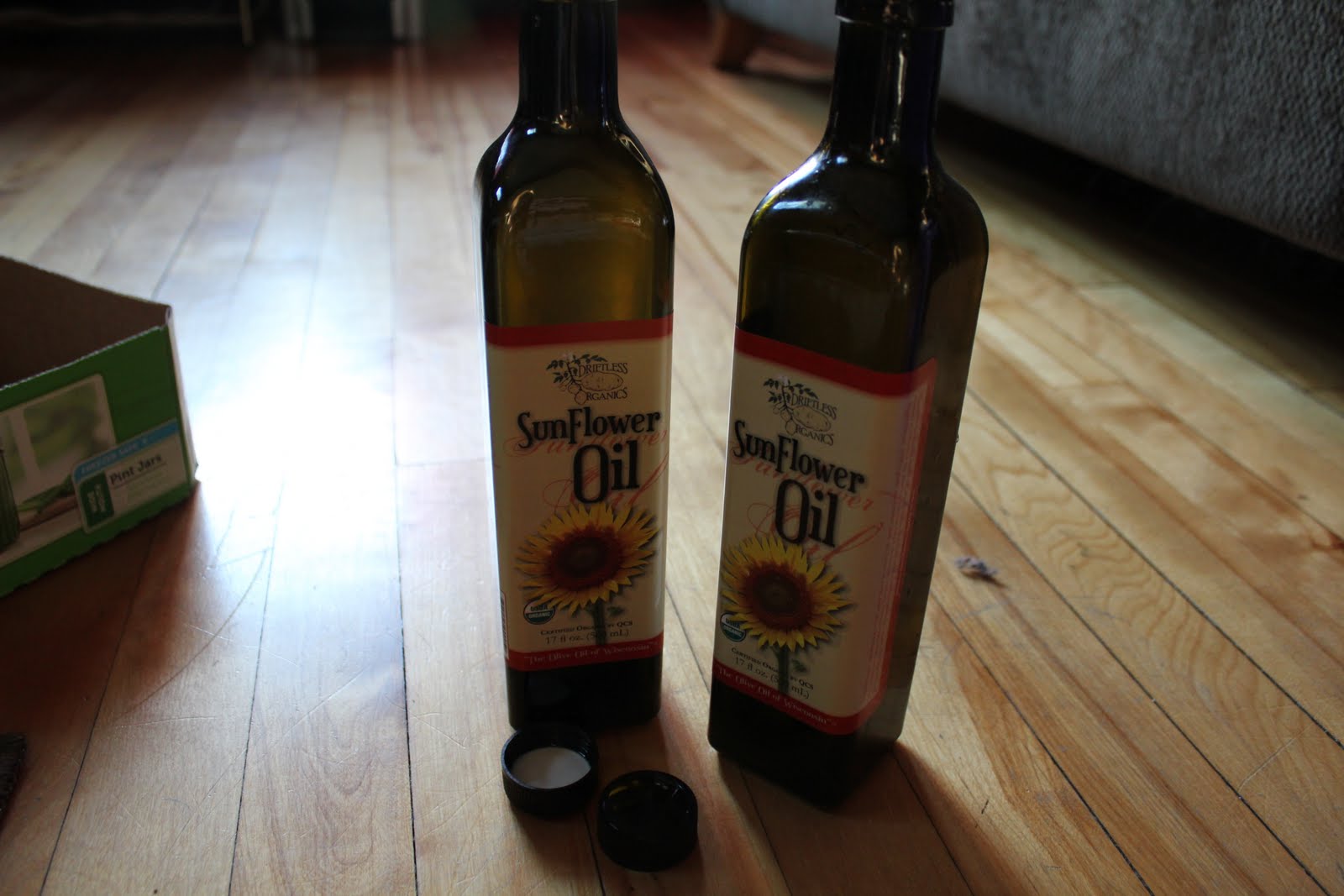
_sunflower oil bottles/plastic tops
_beer/wine bottles
_plastic packaging (from books ordered online and empty soil bags)
_paper waste (junk mail, office paper waste)
Even though the majority of this waste (at least size and weight) is recyclable, I cannot recycle during this project because, that too, uses petroleum to fuel recycling trucks. Both recycling and waste trucks have the lowest gas-mileage numbers of almost any vehicles made, around 3-4 mpg ($20 per gallon). They are really big, heavy, and carry lots of stuff. So while recycling, yes, is better, it still isn't great. Finding ways to eliminate waste altogether is a much better way to deal with the issue.
Ways I have found so far to decrease and eliminate waste are:
1_Buy in bulk: almost ANYTHING can be found in bulk at food co-ops and more and more at regular grocery stores. Buying bulk is cheaper because you aren't paying for any packaging, and it is almost guaranteed to be fresher. "Once you buy bulk you will never go back", (Marcos Lopez-Carlson at the Wedge Co-op))
2_Bring reusable containers for all your bulk shopping and produce shopping. This eliminates the need for all those small plastic bags which cannot even be used as garbage container bags.
3_Compost: Either indoors with worms (if you live in a small space with no yard) or outside in a backyard bin. Composting eliminates organics which turn to sludge in landfills and are unable to decompose, it also can be sold once finished to gardeners. Many cities (or neighborhoods) are starting compost collection pickups. With worms, however, compost hardly accumulates, so your organic waste literally become a non-accumulating cycle.) Compost also allows our house to take out the trash less often because our trash doesn't smell, and it fills up less quickly.
4_Give preference to products which come in returnable/reusable containers. I haven't found many of these so far, but in Minneapolis you can get milk in returnables from Cedar Summit. Find breweries that allow you to buy returnable growlers (Great Waters, Town Hall and Flat Earth in Minneapolis) thanks laurie :)
5_Opt out of junk mail (http://www.privacyrights.org/fs/fs4-junk.htm)
6_Reuse whatever waste you can (reuse glass jars for filling bulk foods, as planters...) I save all rubber bands that come on greens for later use.
7_Shred newspaper for composting (soy wax can be safely composted) and use as worm bedding.
Virajita mentioned to me today that there are actually different amounts charged for various sizes of garbage cans, and her family was able to switch their large garbage cart for a smaller one. I had no idea Minneapolis did this (or any US city for that matter) and I'm guessing a lot of others don't know about it. If you live in a situation where you have your own garbage cans, contact Hennepin County to get a smaller bin!
"The number of carts and recycling bins at your service address are what the previous owner needed for their weekly services. You will continue to have these for your weekly garbage and recycling use, but if you wish to increase or decrease the number of garbage carts or recycling bins you have, please contact our office at (612) 673-2917" (Hennepin County website)
.When looking at the Minneapolis Solid Waste website (http://www.ci.minneapolis.mn.us/solid-waste/garbage.asp
) it only mentions that there are large or small carts. This seems like something that Hennepin County could promote as an environmental benefit as well as a way to reduce their own workload and need for trucks/fuel. Virajita had noticed that they never filled their cart up and called to see about getting a smaller one, they switched it out and the cost is reduced slightly. Waste (like energy and water costs) are not reflective of true cost. As petroleum becomes more and more expensive, we will likely see an increased cost for garbage pick up and restrictions for how much can be dumped from each resident. Until that happens, however, people will likely continue to create waste, unconscious of some of the simple ways they could change their own behaviors to reduce and even eliminate it.
Because it has been almost impossible to not create ANY waste, the little waste I am collecting will be saved until the end of the project. It isn't a problem to save because there is no organic waste (all being composted) so everything is empty bottles and plastic/paper of some kind. According to the Hennepin County website: "None of your garbage goes into a landfill. City of Minneapolis garbage goes to the Hennepin Energy Resource Co. (HERC).Located in downtown Minneapolis, the HERC facility uses mass burn technology to convert 365,000 tons of garbage a year into electricity that is sold to Xcel Energy, Inc." While there are benefits to burning waste (like creating energy) there are also major hazards.
The documentary film, Blue Vinyl illustrates some of these hazards very clearly. While the focus of the film is on vinyl waste, the topic is an accumulation of plastic waste which-once created-has almost NO safe means of disposal. It will not biodegrade, you can't bury it without risks of toxins leaching into the soil, you don't want it to end up in your water supply and you can't safely burn most of it without releasing some of the most deadly toxins known to this earth. Plastic is a huge waste accumulation problem because it is so durable, but burning it really isn't a good option either.
As much as possible I would like to find ways to eliminate the kinds of waste that I am still accumulating, or find other useful purposes for it. Ultimately, everything I collect during the 100 days I will personally deliver by bicycle to the HERC facility :) I bet they'll love that.
This era in history may be remembered as the "Peak Age", a brief time when nearly all materials used to power and create our society reach the maximum extraction and production potential. Past this point, all of these resources become increasingly difficult to extract until they are no longer economically viable resources to be using. There are hundreds of examples of resources, currently embedded in our industrial society, which have reached their peak in the 50 years surrounding 2010, but the one which will most impact our society is petroleum.
The goal of living for 100 days without oil is to understand the extent of our dependance on oil in American society today. Specifically, how it will affect my life, as a 25 year-oil living in Minneapolis, MN. By using myself as a metric I can take a close and conscious look at where oil dependance occurs in all aspects of our daily lives : How we transport ourselves from one place to another, what we eat, how much waste we create, how water is cleaned and transported, where oil is used as; an energy resource, in conventional medicine and for hygiene and how oil affects how we entertain ourselves and communicate with others. By demonstrating how someone would be forced to live without using any oil resources, outlining both what the sacrifices will be as well as the benefits, we can can identify the many systems which will have to be re-designed in a world without cheap oil, and explore a new way of living in which we live in an energy balance.
(At the bottom of this page is a link to my version of a flow diagram of 'Where Petroleum Exists in Our Daily Lives' (using information from the Energy Information Administration-Annual Energy Review 2008 fig 5.0 Petroleum flow) click and zoom to enlarge)
Tuesday, September 14, 2010
Sunday, September 12, 2010
DAY 28_TRANSPLANTS + MINI FRIDGE
11 September 2010
I moved all the vegetable seedlings that made it into 1 gallon pots today. So far in pots I have growing: 3 bell peppers, 1 jalapeno, 1 lemon balm (with 2 sprouts), 1 basil, 1 storage bin of cilantro (3 sprouts). I'm also beginning to realize that the soil depth that I have available in the seed flats (only about an 1.5" isn't going to be enough for the microgreens. The recommended depth is 3-5" and I think once the plants get bigger they won't be able to hold themselves up with only an inch of root depth. I transplanted the half of the flat that was collard greens into some storage bins I had. I'm not sure how well they will do transplanted because they were planted so densely that moving them was kind of difficult (as you can see in the picture) I also started another storage bin (about 6"x6"x1') of new collards to germinate so I'll have a continuous supply of greens as I eat them.
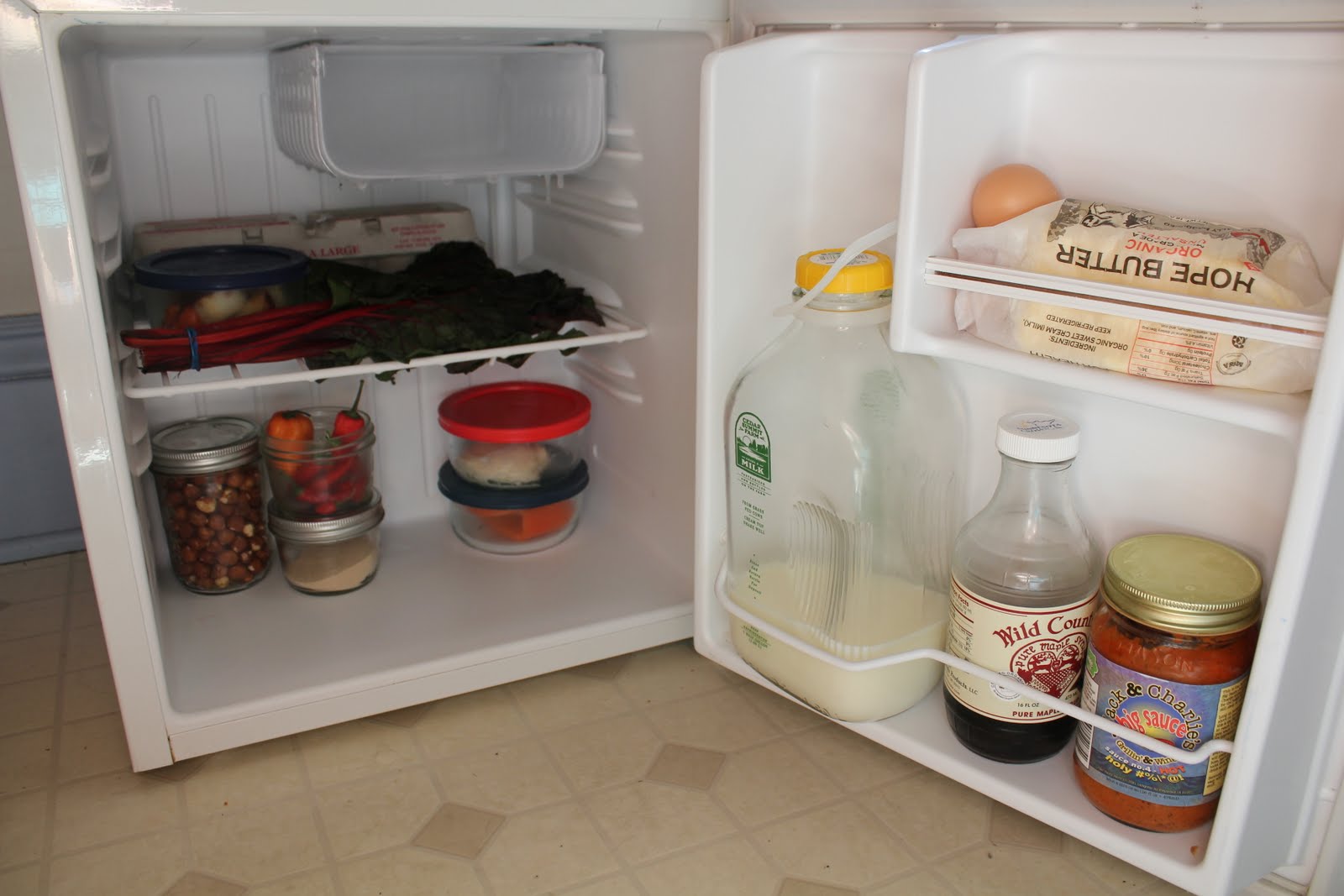
I also measured the electricity usage of my mini fridge today. I plugged the Kill-A-Watt meter in for 24 hours to get a reading of one day of use. It came out to using 22.63 watts/hr, over 24 hours using 0.543 kWh/day. The big fridge uses 68.1 watts/hr (1.68kWh/day). This means that the mini fridge is using less than a third of the energy of the big one! I was surprised about this because I didn't think those little fridges were very energy-efficient, but I'm able to save 1.087 kWh/day now using it. The problem is that I have to be more picky about what gets refrigerated now that I have significantly less space. Apples, pears, yeast, onions and peppers are no longer refrigerated. Instead I have to leave room for the things that absolutely need refrigeration; milk, butter, sunflower oil, eggs, cheese, maple syrup, leftovers. I think we generally over-refrigerate food. While most things will last longer being refrigerated, some foods actually do better without refrigeration. I've started leaving all greens and herbs in glasses of water on the counter instead of putting them in the fridge and they seem to last longer.
I moved all the vegetable seedlings that made it into 1 gallon pots today. So far in pots I have growing: 3 bell peppers, 1 jalapeno, 1 lemon balm (with 2 sprouts), 1 basil, 1 storage bin of cilantro (3 sprouts). I'm also beginning to realize that the soil depth that I have available in the seed flats (only about an 1.5" isn't going to be enough for the microgreens. The recommended depth is 3-5" and I think once the plants get bigger they won't be able to hold themselves up with only an inch of root depth. I transplanted the half of the flat that was collard greens into some storage bins I had. I'm not sure how well they will do transplanted because they were planted so densely that moving them was kind of difficult (as you can see in the picture) I also started another storage bin (about 6"x6"x1') of new collards to germinate so I'll have a continuous supply of greens as I eat them.
I also measured the electricity usage of my mini fridge today. I plugged the Kill-A-Watt meter in for 24 hours to get a reading of one day of use. It came out to using 22.63 watts/hr, over 24 hours using 0.543 kWh/day. The big fridge uses 68.1 watts/hr (1.68kWh/day). This means that the mini fridge is using less than a third of the energy of the big one! I was surprised about this because I didn't think those little fridges were very energy-efficient, but I'm able to save 1.087 kWh/day now using it. The problem is that I have to be more picky about what gets refrigerated now that I have significantly less space. Apples, pears, yeast, onions and peppers are no longer refrigerated. Instead I have to leave room for the things that absolutely need refrigeration; milk, butter, sunflower oil, eggs, cheese, maple syrup, leftovers. I think we generally over-refrigerate food. While most things will last longer being refrigerated, some foods actually do better without refrigeration. I've started leaving all greens and herbs in glasses of water on the counter instead of putting them in the fridge and they seem to last longer.
DAY 27_DAILY COMMUTE
10 September 2010
Downtown bike lanes that run down Hennepin and 1st Ave are painted green and are between parked cars (on left) and the sidewalk (on right) making them safer with the buffer of parked cars on one side. Minneapolis's public transportation organization, Metrotransit, also has several programs to help people commuting by bike. The 'Guaranteed Ride Home' program allows bike commuters to sign up and recieve 2 free cab fare (up to $25) or bus passes every 6 months. They are mailed to you when you enroll. http://www.metrotransit.org/guaranteed-ride-home.aspx
My daily commute is getting longer now that I am taking classes on the St. Paul campus. Three days a week I have classes on both campuses now. I live in Uptown Minneapolis so the first leg of biking is straight to the St. Paul campus (7.6 miles). This takes me about 45 minutes, I take the Greenway, cross the Midtown Greenway bridge over Hiawatha, go up some really ridiculous hills through Prospect Park and then connect to the Bus/bike transitway to the campus. The second leg is down the transitway to the East Bank University of Minnesota campus (4 miles, 15 min). Home is a 6 mile, 25 min ride down the Hiawatha bike trail to the Midtown Greenway again. This is a 17.6 mile 1 hour 25 min commute. Today, however I have a 6 hour gap between classes and went home to have dinner, thus extending my bike time to 2 hours and 15 min and 29.6 miles. Lotta biking.
We are really lucky to have great bike paths throughout the city. The Midtown Greenway is in an old train-bed and runs under a series of street-level bridges. It even has its own on and off ramps which connect it to the streets above. Minneapolis has been ranked as the best biking city in the country by Bicycling Magazine, (http://www.ci.minneapolis.mn.us/news/20100406BestBikeCity.asp) as well as the #2 biking city in the nation by the US Census Bureau (http://www.ci.minneapolis.mn.us/bicycles/MinneapolisClosesGap.asp) We have 43 miles of streets with dedicated bicycle lanes and 84 miles of off street bicycle paths. (http://www.ci.minneapolis.mn.us/)
Downtown bike lanes that run down Hennepin and 1st Ave are painted green and are between parked cars (on left) and the sidewalk (on right) making them safer with the buffer of parked cars on one side. Minneapolis's public transportation organization, Metrotransit, also has several programs to help people commuting by bike. The 'Guaranteed Ride Home' program allows bike commuters to sign up and recieve 2 free cab fare (up to $25) or bus passes every 6 months. They are mailed to you when you enroll. http://www.metrotransit.org/guaranteed-ride-home.aspx
* hiawatha bridge picture from mitchster.com
DAY 26_PETROLEUM-BASED PRODUCT INGREDIENTS
9 September 2010
In the same way, 'synthetic' doesn't necessarily mean petroleum-based. So I'm struggling to find out how to trace these compounds back far enough to understand how they are made, this is a process that has catalyzed into an all-day research endeavour just trying to find out what the ingredients on the back of my face wash mean. I realized pretty quickly how long this process could take and am going to go over just the ingredients in one product first. While many ingredients have similar names, they are often VERY different compounds. I have starred ingredients that I know are petroleum-derived, others may be, but I haven't confirmed...
For anyone not aware, ingredients listed on the back of all products (food and beauty products) are listed in order of quantity in the product. The first ingredients have the highest percentage in the products and the last ones may only have a small percentage of the product. A few resources I have been using to find out what these ingredients mean are:
The Cosmetic Database http://www.cosmeticsdatabase.com/
Truth in Aging website http://truthinaging.com/
So, on to the face wash... the ingredients listed on the back are:
Neutrogena Fresh Foaming Cleanser:
water, glycerin, lauryl glucoside, decyl glucoside, Cocamidopropyl betaine, glycereth-7, ammonium laureth sulfate, sodium cocoyl sacrosinate, glycol stearate, cocamide MEA, PEG-120 methyl glucose dialeate, tetrasodium EDTA, DMDM hydantoin, fragrance (1270-94)
glycerin - a naturally occurring ingredient (also synthetically made) that balances the water levels in skin to facilitate moisture
lauryl glucoside/decyl glucoside-a surfactant (lower the surface tension of a liquid, allowing easier spreading, and lowering of the interfacial tension between two liquids, or between a liquid and a solid. Surfactants may act as: detergents, wetting agents, emulsifiers, foaming agents, and dispersants.(wikipedia))
*cocamidopropyl bentine-Antistatic Agent; Hair Conditioning Agent; Skin-Conditioning Agent - Miscellaneous;Surfactant - Cleansing Agent; Surfactant - Foam Booster; Viscosity Increasing Agent - Aqueous; FOAM BOOSTING; VISCOSITY CONTROLLING
glycereth-7 - Skin-Conditioning Agent - Humectant; Viscosity Decreasing Agent, organic compound
*PEG 120 methyl glucose dialeate - Polyethelene Glycol (number following indicates the molecular weight) and the "methly glucose dialeate" means it is chemically attached. Polyethylene is the most common form of plastic, and when combined with glycol, it becomes a thick and sticky liquid. "In cosmetics, PEGs function in three ways: as emollients (which help soften and lubricate the skin), as emulsifiers (which help water-based and oil-based ingredients mix properly), and as vehicles that help deliver other ingredients deeper into the skin." (http://truthinaging.com/face/what-is-it-pegs) Although fairly safe if not used on broken skin, because PEG's help other ingredients penetrate into the skin, if there are dangerous other ingredients in the product, the PEG will help those penetrate into the bloodstream.
Tetrasodium EDTA - EDTA stands for 'Ethylenediaminetetraacetic acid'. Yeah, woah. It is a water softener and preservative. A persistent organic pollutant, “Widespread use of EDTA and its slow removal under many environmental conditions has led to its status as the most abundant anthropogenic compound in many European surface waters … and has emerged as a persistent organic pollutant” (Wikipedia).
DMDM hydantoin - a preservative that contains formeldayde. Primarily found in shampoos, conditioners, makeup bases and foundations.
fragrance 1270-94 - synthetic fragrance
So there you have it, as you can see, there are all kinds of preservatives and additives in this face lotion (and beauty products in general) which allow it to have a long shelf life, which allows it to be made anywhere in the world and shipped, packaged, shipped, stored and shipped again to a store where it can sit on the shelf until someone buys it to be stored in their own home for a year or longer. Products like this are dependant upon oil for many phases of transportation, as well as energy intensive manufacturing of chemical additives, and lastly, petroleum is actually in many of the ingredients themselves.
Many of the ingredients are included to help cleansers foam and create the right kind of consistency for spreading. Even products which are considered more "natural" and leave out some of the unnecessary chemical additives still contain a number of preservatives that allow it to be shipped around the country and stored for long periods of time.
So how do we wash our faces in a no-oil world? Or wear deodorant? Or lotion our hands? Or clean ourselves? The kinds of products that would be available without oil would likely be sourced locally because they would have minimal or no preservatives and would have a short shelf life (a few weeks to a few months). They wouldn't have any toxins, cancer-causing ingredients found in most products which help them foam up or preserve them. We would likely make more of our own products due to the short shelf life and convenience of it. I've started making my own products from recipes found in Casey Kellar's book, Natural Alternatives for You and Your Home.
To compare, my body wash has 8 ingredients (water, saponified organic coconut and organic olive oils, organic hemp oil, organic jojoba oil, citric acid (a natural preservative), vitamin E, vegetable glycerin and tea tree essential oil) compared to the 23 ingredients on the St. Ives body wash I used to use. The deodorant I made has 3 ingredients (aloe, baking soda and essential oil) compared to 15 on Michum deodorant.
Friday, September 10, 2010
DAY 25_CAT vs PLANT
8 September, 2010
My new roommate Abby has a cat. This cat's name is Quill. Quill is a gray little bundle of fluff with a huge, fluffy, gorgeous tail. Quill is a wonderful little cat, kind of quirky, but what cat isn't. I feel like Quill and I had a pretty good relationship going until yesterday...when I walked into the dining room to find her LAYING in my greens seed flat! Quill! What are you doing? Dirt isn't a bed! Its dirty! Man.
The greens were pretty flattened and she had dug around in them a little bit, but I managed to pull them together pretty well, and they are starting to pop back up again. The situation, however, is that Quill knows she isn't supposed to be on the grow table and goes up there when we aren't looking. I've walked in the room a number of times to see just the flash of her jumping off of the table before I can see her.
I don't know what it is about cats in plants, but they seem to love to be in them. While, with houseplants this is ok as long as they aren't eating them, with vegetables/greens I am going to eat it is a different story. First of all, this is my FOOD, I'm basically hoping these greens will grow because they are my only option for eating greens once they stop growing locally (pretty soon). Secondly, unlike root vegetables, the part that is growing above ground is what I'm going to be eating so having cat's laying in them is kinda gross. I'm feeling really protective about these greens...
Anyway, Abby and I have decided that we can block off the part of the house that the grow table is in during the part of the day we are all gone, when we are around, Quill knows to stay off. Sorry Quill, but you've lost free-roaming privileges.
Its interesting to think about the challenges of having pets and growing food inside. If people start doing this more and more (as they may have to to make up for a short growing season here and a need to eat locally without petroleum-based transportation) the area for growing will have to be designed in a way that animals won't be able to mess with it.
I should also mention that it has been getting REALLY cold. It is usually around 50 degrees when I am getting up in the morning, and the heat hasn't kicked on in our house yet because most of the day it is warm enough. The morning is the coldest part of the day, though, and while it would be nice to have heat, I'm glad I am not having to factor that into my electricity/energy budget yet....there will probably be some big changes/sacrifices when that happens. This is another paradox of energy because as it gets colder, there is more of a need for energy to create heat; in our food, in the spaces we inhabit, heating water, storing food (refrigeration)...but I will have less of an energy budget because these things will all be competing for energy. All the things I would have done before the project to keep warm are already starting to come to mind; electric blanket, drinking LOTS of warm liquids, crank the heat, space heaters, warm foods, hot showers. Starting with a cold bucket shower in the morning I have a hard time warming up the rest of the day (warm up a little biking around). I usually am wearing a sweater/jacket all the time, even indoors. In order to conserve the energy/heat I am using to make tea in the morning (because it is SO cold after showering) I put it in this amazing thermos I have which keeps it warm ALL day, great job thermos. This way I can bring hot liquids with me without having to use more energy to constantly be heating them. I think warming up a gallon of water in the morning may need to become a priority...
My new roommate Abby has a cat. This cat's name is Quill. Quill is a gray little bundle of fluff with a huge, fluffy, gorgeous tail. Quill is a wonderful little cat, kind of quirky, but what cat isn't. I feel like Quill and I had a pretty good relationship going until yesterday...when I walked into the dining room to find her LAYING in my greens seed flat! Quill! What are you doing? Dirt isn't a bed! Its dirty! Man.
The greens were pretty flattened and she had dug around in them a little bit, but I managed to pull them together pretty well, and they are starting to pop back up again. The situation, however, is that Quill knows she isn't supposed to be on the grow table and goes up there when we aren't looking. I've walked in the room a number of times to see just the flash of her jumping off of the table before I can see her.
I don't know what it is about cats in plants, but they seem to love to be in them. While, with houseplants this is ok as long as they aren't eating them, with vegetables/greens I am going to eat it is a different story. First of all, this is my FOOD, I'm basically hoping these greens will grow because they are my only option for eating greens once they stop growing locally (pretty soon). Secondly, unlike root vegetables, the part that is growing above ground is what I'm going to be eating so having cat's laying in them is kinda gross. I'm feeling really protective about these greens...
Anyway, Abby and I have decided that we can block off the part of the house that the grow table is in during the part of the day we are all gone, when we are around, Quill knows to stay off. Sorry Quill, but you've lost free-roaming privileges.
Its interesting to think about the challenges of having pets and growing food inside. If people start doing this more and more (as they may have to to make up for a short growing season here and a need to eat locally without petroleum-based transportation) the area for growing will have to be designed in a way that animals won't be able to mess with it.
On another note, with school starting I'm now spending the majority of each day in studio and class and (after starving for a few days because I didn't bring food I could eat) am realizing that I need to start bringing local, organic food that doesn't have to be refrigerated or microwaved for lunches. This morning I made some tortillas which I can dip in pesto (for lunch) or maple syrup (for snack) in. These tortillas are more like Indian naan because they are a little bit thicker and doughier than actual tortillas. Really good, super simple, and I can really use them for a lot of different things; with sugar and butter they are a yummy dessert, they can be used for cold-wraps (with sprouts and other vegetables), used for little pizzas, or just with spreads.
1/4 Cup sunflower oil
1 teaspoon salt
3/4 Cup hot water
a little honey or maple syrup
Mix, add flour as needed to create soft ball.
Knead until smooth.
Let sit for 30 minutes.
Break in half, then half again, then thirds. Makes 12 tortillas.
Roll out until thin on a floured surface.
Cook on medium heat, both sides, ready when turns from wet to dry
I need to leave time in the morning to make whatever I'm going to bring everyday, so I usually get up around 6:00 (I was getting up with the sunrise at 6:30) to make food for the day). I've also been bringing fruits, nuts and bread, but the tortillas with some kind of dip satisfies a craving for good-tasting sugared or seasoned food :) thanks for showing me abby!
Wednesday, September 8, 2010
DAY 24_ENERGY PARADOX
7 September 2010
First day of class, took a cold bucket shower, accidentally drank sour milk, exploded my blender making a green smoothie, ran out of time to make another breakfast and biked in a 55 degree, gray drizzle 8.6 miles to the St. Paul campus at 7:30am, with a guitar strapped to my back. Good start to a semester without oil, ha.
I had to rig up a way to carry both my guitar and my bag that has my laptop to school because I'm taking a guitar class this semester :) This is great, but when you are biking 17 miles round trip for class everyday it can get a little old. I bike 7.6 miles to St. Paul in the morning, then 3.4 to the Minneapolis campus and 6 miles home at the end of the day.
I'm still working on calculating the watts/hr that specifically each of my appliances use, however there are a number of online resources for finding average numbers to use that are serving as 'stand in' numbers until I get my own. I looked at this site, which talks about various methods for cooking and comparing energy and cost:
http://michaelbluejay.com/electricity/cooking.html
Electric Stove burner (4400 watts) x 30 min =1,250 watts/hr 1.25 kWh
Electric Oven, 1 hr = 2.0 kWh
Toaster Oven (2000 watts) x 1 hr = 0.16kWh
An average blender is 300 watts. Because it is only on for 2-3 minutes it uses about 9-10 watts/hr 0.009kWh, which is significantly less than any of the above methods of cooking. To compare my oatmeal breakfast (about .625 kWh) versus the smoothie (0.009kWh) there is a big difference!
The use of appliances and other low-energy devices in our homes is an interesting part of this project. While the number of electronic devices in our homes continues to increase (electric toothbrushes, toasters, blenders, juicers, rice cookers, electronic can opener, leaf blower, vacuum pack sealers....) these things are relatively low energy. During the process of putting together a list of electric use I'm beginning to notice that the big energy users are my fridge, computer (because I use it all day), electric stove burners, and the grow light. The paradox is that these are the things I would have a difficult time eliminating. The little devices and appliances add up, but using them in moderation (and only the ones you really need) doesn't contribute to the total energy use very much. The other paradox is that as I've begun to cook everything from scratch I am more likely to need (or use) more kitchen appliances I didn't use before (blender, dehydrator, bread maker). I've gone through and eliminated some of the unnecessary appliances I used before (ones I could easily live without). These include my; hairdryer, microwave, clothes washer, clothes dryer, lights in rooms I don't need.
An interesting report on the rise of 'miscellaneous' electricity products is found here:
http://enduse.lbl.gov/info/LBNL-40295.pdf
and shows these interesting graphs on rising use in different categories:
First day of class, took a cold bucket shower, accidentally drank sour milk, exploded my blender making a green smoothie, ran out of time to make another breakfast and biked in a 55 degree, gray drizzle 8.6 miles to the St. Paul campus at 7:30am, with a guitar strapped to my back. Good start to a semester without oil, ha.
I had to rig up a way to carry both my guitar and my bag that has my laptop to school because I'm taking a guitar class this semester :) This is great, but when you are biking 17 miles round trip for class everyday it can get a little old. I bike 7.6 miles to St. Paul in the morning, then 3.4 to the Minneapolis campus and 6 miles home at the end of the day.
I'm still working on calculating the watts/hr that specifically each of my appliances use, however there are a number of online resources for finding average numbers to use that are serving as 'stand in' numbers until I get my own. I looked at this site, which talks about various methods for cooking and comparing energy and cost:
http://michaelbluejay.com/electricity/cooking.html
Electric Stove burner (4400 watts) x 30 min =1,250 watts/hr 1.25 kWh
Electric Oven, 1 hr = 2.0 kWh
Toaster Oven (2000 watts) x 1 hr = 0.16kWh
An average blender is 300 watts. Because it is only on for 2-3 minutes it uses about 9-10 watts/hr 0.009kWh, which is significantly less than any of the above methods of cooking. To compare my oatmeal breakfast (about .625 kWh) versus the smoothie (0.009kWh) there is a big difference!
The use of appliances and other low-energy devices in our homes is an interesting part of this project. While the number of electronic devices in our homes continues to increase (electric toothbrushes, toasters, blenders, juicers, rice cookers, electronic can opener, leaf blower, vacuum pack sealers....) these things are relatively low energy. During the process of putting together a list of electric use I'm beginning to notice that the big energy users are my fridge, computer (because I use it all day), electric stove burners, and the grow light. The paradox is that these are the things I would have a difficult time eliminating. The little devices and appliances add up, but using them in moderation (and only the ones you really need) doesn't contribute to the total energy use very much. The other paradox is that as I've begun to cook everything from scratch I am more likely to need (or use) more kitchen appliances I didn't use before (blender, dehydrator, bread maker). I've gone through and eliminated some of the unnecessary appliances I used before (ones I could easily live without). These include my; hairdryer, microwave, clothes washer, clothes dryer, lights in rooms I don't need.
An interesting report on the rise of 'miscellaneous' electricity products is found here:
http://enduse.lbl.gov/info/LBNL-40295.pdf
and shows these interesting graphs on rising use in different categories:
DAY 23_SOLAR AT THE STATE FAIR
6 September 2010
The past few years the Minnesota State Fair has put together a huge exhibit called the Eco-Experience. It has its own building and is run entirely by volunteers (about 400). The Eco-Experience has exhibits on solar power, wind power, local foods, transportation, composting/waste, water quality...They get people to volunteer by offering training sessions in each area. People who want to to learn more than they could just walking through the exhibits can go to a 3 hour training session and get a more in-depth understanding of the systems and then volunteer for at least one shift at the fair (free ticket!). Anyway, so solar power has been explained to me about 1,872 times and I still can't say I really get it so I volunteered for this thing.
The kinds of people who volunteer for something like this are coming from ALL over the place, everyone has their own reasons to learn about solar power, but in most cases people are recognizing that solar power is a HUGE upcoming industry and people want in on it.
Of course, the day I volunteered was one of the crappiest days of the fair, cold, rainy and overcast. So much for solar power :/ I was working outside where they had a bunch of panels hooked up to various things so people could see up close hows things looked and worked. With off and on sprinklings of rain we still had a small steady stream of people. What was interesting was when the sun would come out lots of people would suddenly flood into the area. I think there must be a perception that solar power only works in full sun. I had a few people come up to me and (noticing that our gadgets were still working with overcast skies) would ask how they were working on such a crappy day. The solar panels still capture light on overcast (even pretty dark) days, but are significantly better in full sun. This was demonstrated by the largest array they had (about 8 3'x5' panels) which was hooked up to a wattage meter. Watching the meter move throughout the day (from dark rain to full sun) was interesting. The highest wattage the panels were producing was 750 watts and the lowest I saw was about 30 watts. That's a pretty big range. The wattage per square foot was ranging from 6.25 watts/sq ft (750 watts) to only 0.25 watts/sq ft. A pretty average peak wattage from what I understand is about 8 watts (peak) per sq ft.
Subscribe to:
Posts (Atom)